
by John Jefferson
The Air Force once named a new plane the “Warthog.” It’s said the African warthog was ugly, mean, and had bumps on its face resembling warts. Some saw that new plane as having similar characteristics. But this column is not about airplanes.
I’ve heard for years that warthogs (the animals) had been released onto South Texas exotic hunting ranches during the 1900s and 2000s.
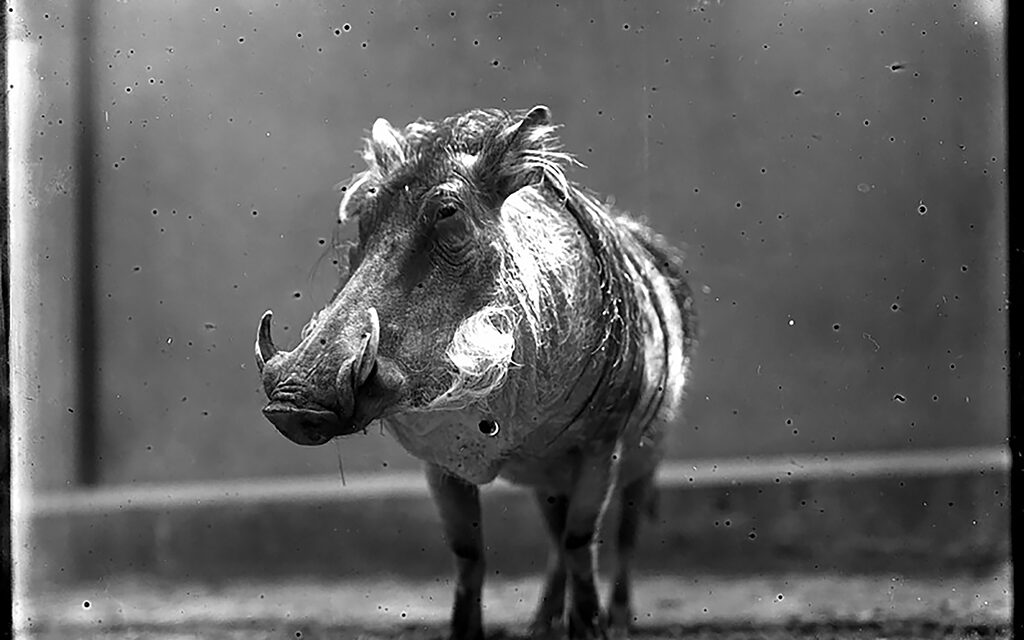
They are fierce-looking, and have fibrous growths below their eyes, resembling warts. The warts are said to be for protection of male warthogs when fighting. Females also have them, but theirs are smaller.
They also have sharp and scary tusks capable of slicing and dicing attackers. Javelinas and feral hogs have wicked tusks, too. I’ve seen their damage to hunting dogs –but warthogs are reputed to be more capable of severe mayhem.
Their exact range can’t be defined with 100% accuracy. They go where they please, often travelling at night. Most agree that warthogs burrowed beneath fences and escaped from their original hunting ranches.
They’re known to be in LaSalle, Dimmit, McMullen, and Zavala counties. Reports also indicate them in Duval County and near Cotulla, Asherton, and Three Rivers.
They flee danger instead of fighting but can be dangerous to humans and predators when cornered. Those prominent tusks are lethal. Warthogs don’t make loving little house pets.
The hot, humid, brushy, South Texas environment helped them acclimate into the habitat. It was like their African homeland. Parks and Wildlife classifies them as “Exotics;” not game animals, so, they may be hunted freely with no season, bag limit, or other regulations. A hunting license and landowner permission, though, ARE required.
Before you pack up to go shoot a few, you need to know they are seldom seen – even in the counties mentioned. Unlike their feral friends — profuse all over Texas — their population is considered small and stable.
A ranch realtor friend’s website – “James Bigley Ranches “ — says overpopulation is unlikely: “Their range is expected to stay limited to the warmer South Texas Brush Country … at least for now.”
And they only breed half as often as their invasive cousins and have fewer piglets in each litter.
Their only enemy seems to be human hunters, but TPWD’s Big Game Program Leader, Blaise Korzekwa, says to not worry about over-hunting since warthogs are rarely seen – even in the counties mentioned.
Many wildlife professionals have never seen one. Neither have I, although I’ve hunted in all mentioned warthog areas. Photos are rare. I’ve read that most photos were taken by trail cameras at feeders.
Most warthogs have been shot by deer hunters when one appeared while he hunted deer – somewhat like wild turkeys back in the days before spring turkey seasons were established.
Warthog meat is edible, especially the ribs, which are larger and better flavored than pork ribs. (Yum!) Its meat is leaner than pork, lower in cholesterol, and more flavorful.
Like pork, it must be well-cooked.
JJ
(Photo at Top) Warthogs, originally from Africa, are rare in Texas, but exist in several areas in South Texas. Their limited population and timid personality make seeing one on the hoof unpredictable. Hunting them is likewise chancy. They are classified by TPWD as Exotics and hunting them is not regulated. A Valid hunting license and landowner permission are required, however. (1909 photo is credited to Smithsonian Institution Archives Acc.14-167, Image No.NZP-0278.)