
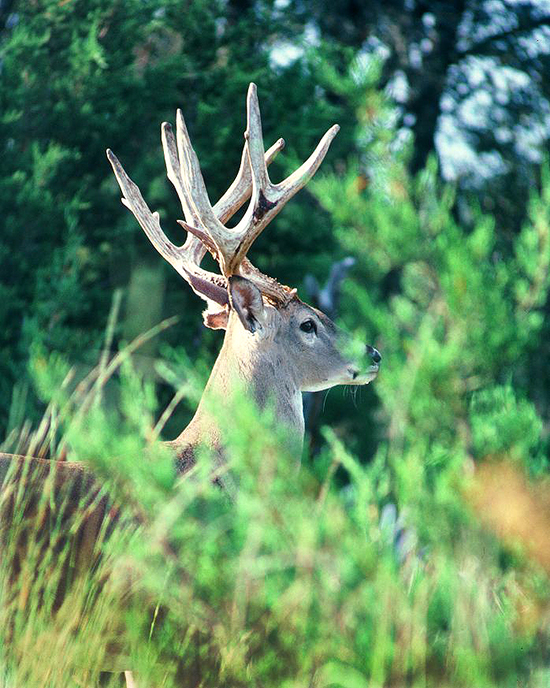
Bucks may become more careless during the rut than at other times of the season. But that doesn’t mean hunters can always expect a buck to present a perfect target. The buck pictured was visible for only an instant before moving out of sight. All skills must be employed. (Photo by John Jefferson.)
by John Jefferson
When deer hunters and wildlife professionals refer to “the RUT,” they mean the time when White-tailed deer are breeding.
It’s a time when buck deer become less concerned about safety and are more motivated by finding a doe biologically ready to breed.
What that means to hunters is that buck deer move around more than they typically do at dawn, dusk, and during darkness. And, as indicated above, they are less wary of hunters. In short, it’s one of the best times for hunters to be hunting. More bucks are seen then.
Texas Parks and Wildlife Department (TPWD) wildlife biologists studied distinct rutting periods in different parts of the state. They picked 16 sites for breeding in each ecological region and determined a “peak” breeding date for each study area. Below are the breeding seasons and peaks by regions. See the map showing the regions by area.
The earliest whitetail breeding in Texas takes place in the Gulf Prairies and Marshes from August 24 – November 25. It peaks in the North Area on September 30; the South Area on October 31.
The Post Oak Savannah breeding occurs from September 30 – January 16. It peaks November 10-11.
Pineywoods hunters can expect breeding from October 21-January 5, with peak breeding on November 22 in the North area; November 12 in the South.
The Rolling Plains breeding runs October 8 – December 30. The peak in the North area occurs December 3; November 2 in the South.
Hill Country deer breed from October 9 – January 30. The Eastern Area peaks November 7; Central Part on November 24: and Western Area on December 5. I walked up on a young eight-point buck and a doe hanging out together on the last day of the season on January 3 one year.
They saw me but were more occupied with each other than safety. They looked at me almost indignantly, as if to say, “Hey, leave us alone!
We’re busy!” I laid down my Model 70 Winchester and just watched them for about ten minutes. They glanced at me several times but made no effort to run off.
The Cross Timbers rut is October 13-December 17. The North part peaks November 15; South Area November 17.
Out west, the Trans-Pecos deer breed November 4-January 4, with a peak on December 8.
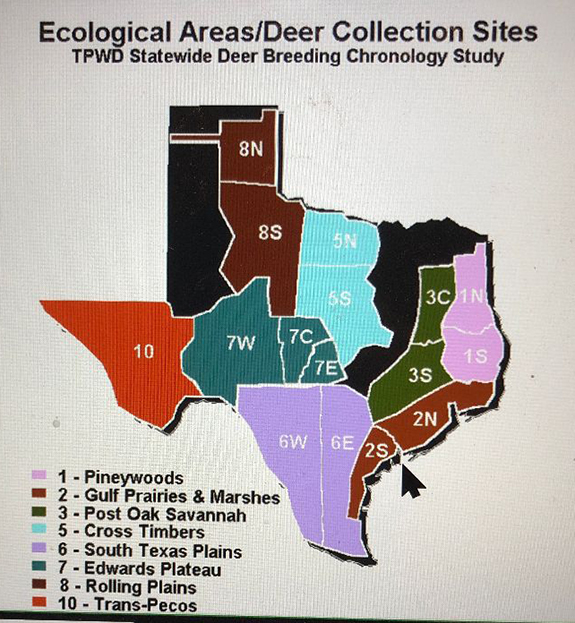
South Texas Brush Country hunters can expect breeding from November 9–February 1. The Eastern portion peaks December 16; the Western part peaks December 24. This Region has the latest white-tailed deer breeding in Texas.
These dates were determined by counting back from date of birth of a fawn (a known date) to date of conception to determine when it was bred. So, can these “rut peak dates” be relied upon in the future?
Recent research by the National Deer Association indicates that the rut will usually take place on the same calendar dates every year.
Success, though, is still up to the hunters. You can’t rely on a buck’s carelessness.
JJ