
by John Jefferson
According to Texas Parks and Wildlife Department (TPWD) surveys, Texas has roughly five million white-tailed deer.
Google says 2,660,000 are female. (It failed to cite its source.) TPWD was involved in search and rescue operation concerning the horrendous, tragic flooding along the Guadalupe and San Saba rivers in Central Texas last week and could not be reached for confirmation.
That figure is probably close enough for this column since doe deer are known as the largest segment of the deer herd. The other two population segments are bucks and fawns.
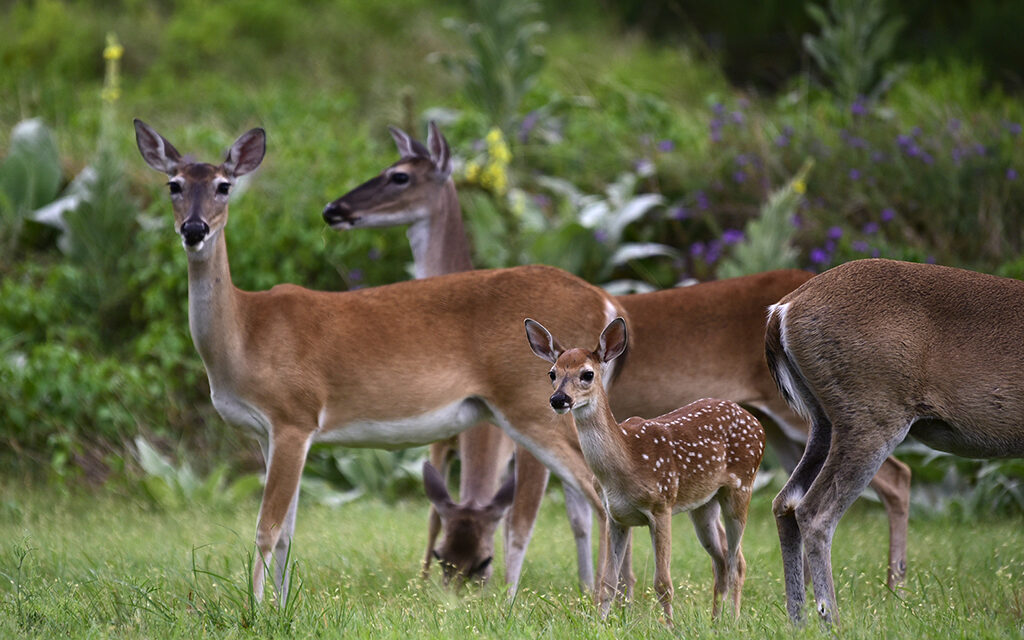
Most sexually mature doe deer are capable of delivering twin fawns. They’re born between late April and September. Fawn mortality and predation take unknown number of fawns. But considering this year’s good range conditions, does and their fawns appear to be in excellent condition, suggesting high fawn survival.
The area struck by the hideous Fourth of July flooding happened to be in the most densely deer-populated counties in Texas – Kerr, Llano, and Mason. Some deer – especially fawns – Likely have drowned. No estimates are available.
And since does usually hide, newborn fawns in tall weeds or other protective vegetation, contributing to inaccuracy of some counts, all that can be realistically reported is that Texas will probably have one heckuva crop of fawns this year!
Having mentioned does hiding their fawns in high weeds segways into a problem that returns every year, no matter how much publicity it gets in advance.
People without much real knowledge of deer besides what they picked up from Disney movies see a fawn alone in the weeds, or even in a neighborhood flower bed, too often jump to the conclusion that it’s been abandoned by its mother or orphaned somehow.
I admire concerns about wildlife’s welfare, but it must be tempered by an understanding of deer lifestyles.
Giving birth to a single fawn and nursing it through a hot summer with little rain and consequent declining vegetation takes a toll on a doe mother’s energy and stamina. It’s doubly draining on a mother of twins. Like mothers of all species, they need a break to get a little rest and sometimes must travel a distance to find ample vegetation to supply needed nutrition as summer continues. Their little ones aren’t developed enough to trail alongside their mothers at an early age, and the doe-mothers hide them as best they can to camouflage them from predators like coyotes or domestic dogs. At birth, fawns are scentless.
Mothers of other species do that, too. Even MOSES’ mother hid him in the rushes to protect him from Pharoah. He grew up to be a leader of the Hebrew people and took them on a forty-year hike and camping trip eating quail and wrote five books, becoming the world’s first outdoor writer.
So, leave the fawns alone where their mothers left them. Their mothers will probably be back. And nobody wants to get between a mother and her kids … or cubs, or calves, or fawns.
JJ