
by John Jefferson
Years ago, I heard a former Chairman of the Texas Parks and Wildlife Commission questioningly ask, “Haven’t we studied deer enough?” Fortunately, time and science marched on.
Much has been learned about deer since then. And I feel we will always be learning something new. That’s the backbone of science.
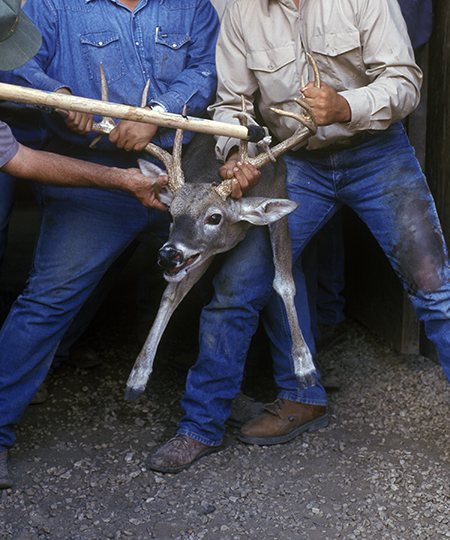
Many hunters know that judging a buck’s age by his antlers alone without knowing his prior nutritional history is often misleading. Recent research indicates that judging a buck’s potential antler development and ability to pass genetics in breeding is also unreliable. The most dependable result from culling bucks (or does) is that it removes hungry mouths from the range, leaving more nutrition for remaining residents. (Photo by John Jefferson.)
I just received a copy of a 134-page scientific article on Selective Harvest of White-Tailed deer, published in the Journal of Wildlife Management. “Selective harvest” means culling bucks.
Culling is simply removing questionable apples from good ones. But I hesitate to call a “cull buck” a bad deer. To me, they’re all “good”. But is removing young bucks with antlers that don’t look likely to attain trophy buck status at maturity wise?
As one can imagine, answers can vary from one hunter or land manager to the next one.
The 134-page article was sent to me by Mickey Hellickson, one of the authors, who holds a Ph.D. from Texas A&M-Kingsville in wildlife biology.
My respected deer research colleague, Hellickson, authored ten pages of the publication of a 20-years-long study of white-tailed deer that he said would answer once and for all the questions about the effect of culling buck deer with less than expected trophy class antlers.
Mick is a colleague only in the sense of our professional friendship and mutual interests in whitetails – not in deer acumen. He is former Chief Wildlife Biologist at King Ranch, one of the ranches where research for the article was conducted.
The study was published recently in the Journal of Wildlife Management, the scientific publication at the head of the class of peer reviewed wildlife management research. The principal author was Don Draeger, wildlife manager of the Comanche Ranch in Dimmitt and Maverick counties, the other ranch providing research. Other authors of the work included A&M-Kingsville Ph.D.’s (both Doctors) DeYoung, Dr. Hellickson, Dr. David Hewitt, TPWD Wildlife Director Alan Cain, and others.
The scientific publication was difficult reading for a non-scientist, but I stumbled through it several times as it addressed seemingly every facet of antler development research and came to similar conclusions that previous studies had reached — that culling deer with lesser-blessed antlers was not as significant as the effect of environmental factors — like the timing of droughts and rainy years.
The “Management Implications” section of the study acknowledged that research done in South Texas was subject to prolonged droughts which affected antler growth, as well as years of sufficient rainfall. Culling could result in removing bucks with potential antler growing ability that was masked by weather. And even if it could influence antler quality and be heritable, it would take decades more time to see that result.” Managers shouldn’t expect genetic improvement within reasonable time,” was the way the document stated it.
The thorough content of the 20 years of research was impressive and explained every phase of the study. It will probably be cited by deer researchers, writers, land managers, and hunters for years to come.
JJ