

by John Jefferson
All daily newspapers and many smaller papers have done a great job sounding the alarm about the 2026 version of screwworms — and that’s certainly commendable!
Enough cannot be written about the situation, though, and I want to share the latest word from the Texas Animal Health Commission.
Regular readers of this column will recall I began including the advancing screwworm detections in February 2025 when the first cases crossed over into Mexico from Central America. I was the first outdoor writer to publish news of it, and there was a reason for that.
I was a fairly new deer hunter during the last conflagration of these nasty, deadly, little pests. The word “conflagration” is traditionally defined as being “an extensive fire which destroys a great deal of land or property.” Although they aren’t actually on fire, the flies do have the color of fire in their eyes and certainly destroyed million$ worth of livestock, along with many white-tailed deer.
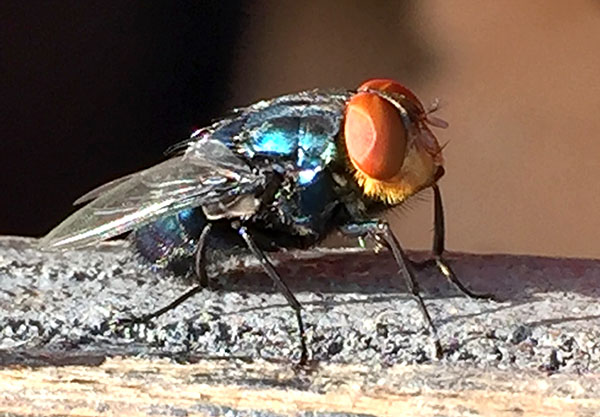
Don’t panic! This image of a Screwworm fly is enlarged so you can see it better. Thankfully, they aren’t this big in real life. They are a little larger than a common housefly, but not quite as big as a horsefly, and their eyes are orange. They are most active in summertime, laying eggs in open sores of ANY warm-blooded animal, including livestock, wildlife, pets, and even people. Their eggs hatch into larvae that eat living flesh, boring into vital organs, which often leads to the host’s death. (Photo courtesy of the U.S. Department of Agriculture.)
Screwworms were on a rampage when I began hunting deer. I saw pictures of a deer with half its face eaten off and cattle killed, all by screwworm larvae that had gorged their way into vital areas. It was nauseating to see.
Larry Weishuhn, a friend and outdoor writer- colleague who also formerly worked for Texas Parks and Wildlife Department, was on a podcast about the larvae last week and pointed out that summertime is the most active time for the screwworm flies to lay eggs in an open wound .
And if you have been reading the papers, you know that the most successful weapon for eliminating the threat is the scientific release of sterile, orange-eyed flies. And you might also know that female screwworm flies only breed one time during their life. If they choose a sterile fly to consort with, fertilization fails.
But the only facility releasing sterile flies when all this started was in Panama. And it cannot produce enough male flies shooting blanks to handle a full – scale onslaught of reproducing flies.
A new facility was being constructed. It was said to be online in 2027. But this emergency can’t wait.
I contacted Erin Robinson, communications director for the Texas Animal Health Commission on June 19. She had provided me timely and accurate information in the early stages of the current threat, beginning in February 2025.
Ms. Robinson confirmed that no pets or human cases have been documented in Texas at this time. Two livestock owners each euthanized a sheep of theirs, and there have been no other deaths in Texas than those –- Yet!
She also had some great news! Governor Abott sensed the release of enough sterile male flies could not wait until 2027 and encouraged speedy production of the new sterile fly facility. According to her, the facility capable of releasing 100 million flies per week will be online THIS JULY!
Until that takes effect, monitor your livestock, pets and family for open sore landing pads for flies.
JJ