

by John Jefferson
My wife thinks I have a death wish regarding big cats, like grizzly bears and mountain lions.
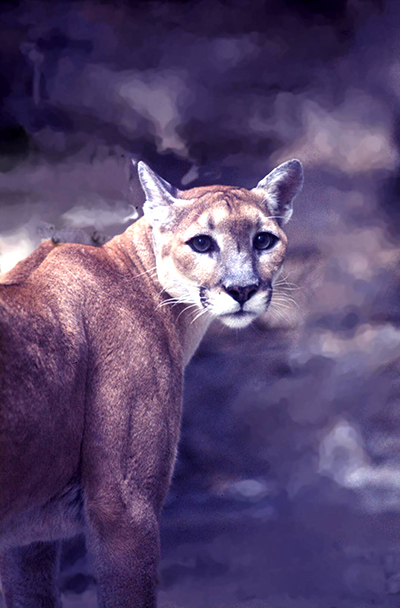
PUBLIC COMMENTS on new mountain lion harvest reporting proposals are requested by TPWD. Online comments may be made on the TPWD Public Comment Page until May 27. Email comments may be submitted to Jonah.evans@tpwd.texas.gov. In person comments (2-3 minutes) may be delivered at the TPWD Commission meeting at TPWD Headquarters at 2200 Smith School Road on May 28 beginning at 9 a.m. (Mountain lion photo by John Jefferson)
Not so. But I admit seeing one of those in the wild is a professional challenge I accept.
And a supreme challenge it certainly is. Grizzly bears — and ALL bears for that matter — are difficult to see — first of all, due to their habitats and habit of avoiding humans. The latter of those two elements is a good thing. Bears are extremely dangerous. Just ask my friend and photography colleague, Tim Christi.
Tim lives in Idaho, working a different beat from mine. He photographs wildlife in the Rockies and does a superb job. And before some former English major questions my use of “supreme” and “superb” in consecutive paragraphs, when referring to grizzly bears and Tim Christi’s photography, I stand by the usages.
I don’t have room to tell you more about TIM, but he is the only person I know who got close enough to a griz to have to climb a tree to escape its charge. Experts say tree climbing doesn’t help since bears can climb trees, too. Tim agrees.
The bear started up the tree after Tim but only ripped off one tennis shoe before it lost interest. Maybe it didn’t taste like food. And Tim was glad he had worn tennis shoes that day instead of his usual lace-up hunting boots, which don’t pull off as easily.
Grizzly bears are extinct in Texas. Wildlife scientists are taking a deeper look at mountain lions.
Texas Parks and Wildlife Commission is considering more detailed reporting of mountain lion kills. But isn’t existing voluntarily reporting of mountain lion killings enough? What’s the fuss?
Mountain lions are rarely seen but not endangered, that we know. And they aren’t running rampant attacking humans. So just how many mountain lions are in the Texas population?
That’s the problem. They are secretive, elusive, and avoid hunters and most humans. Their favorite food source is white-tailed deer, so they have plenty to eat; Texas has over five million deer. They are primarily found in the Trans-Pecos, the South Texas Brush Country, and the Hill Country. The primary source of population data is information from lions killed AND reported by hunters.
But since hunter reporting is voluntary, it’s almost like pulling teeth to get much information. So, now, it’s being proposed that ALL mountain lion kills MUST be reported within 24 hours of their demise. And extracting a premolar tooth and tissue sample are also required, but more time is allowed for that.
My previous dentist was a hunter, but most hunters aren’t dentists, so the proposals permit calling a wildlife biologist to do the removal. I closely watched that being performed on an anesthetized black bear in Missouri once, and it looked pretty simple.
More information on reporting a lion kill is available in the Texas Mountain Lion Research and Monitoring Plan on the TPWD website. See the photo caption herein for public comment options on the proposal.
JJ