
by John Jefferson
The headline of Texas Parks and Wildlife Department’s (TPWD) August 14 press release spoke of “Ghost Deer,” 24 suspects, and 1,400 charges filed.
That sounded kinda spooky. Although it wasn’t even that near Halloween! But it probably aroused attention among hunters, wildlife professionals, the deer breeding industry, and everyday folks that are fed up with hearing about another case of Chronic Wasting Disease (CWD) showing up in deer breeder’s pens. It’s happening regularly.
Some probably also wondered what a Ghost Deer was. And what it or somebody did wrong to be charged with so many violations. One explanation came from a retired wildlife biologist and former TPWD Big Game Leader.
Game Wardens have their own language. That may have started with the “10-codes.” You know: “10-4” – the shorthand version of “Yeah, I understand.” Even civilians use it today. I heard a game warden describe a suspect once as “having a lot of rabbit in him” – – meaning he was apt to run when approached by lawmen. “Ghost Deer” may have become part of game wardens’ vocabulary that way.
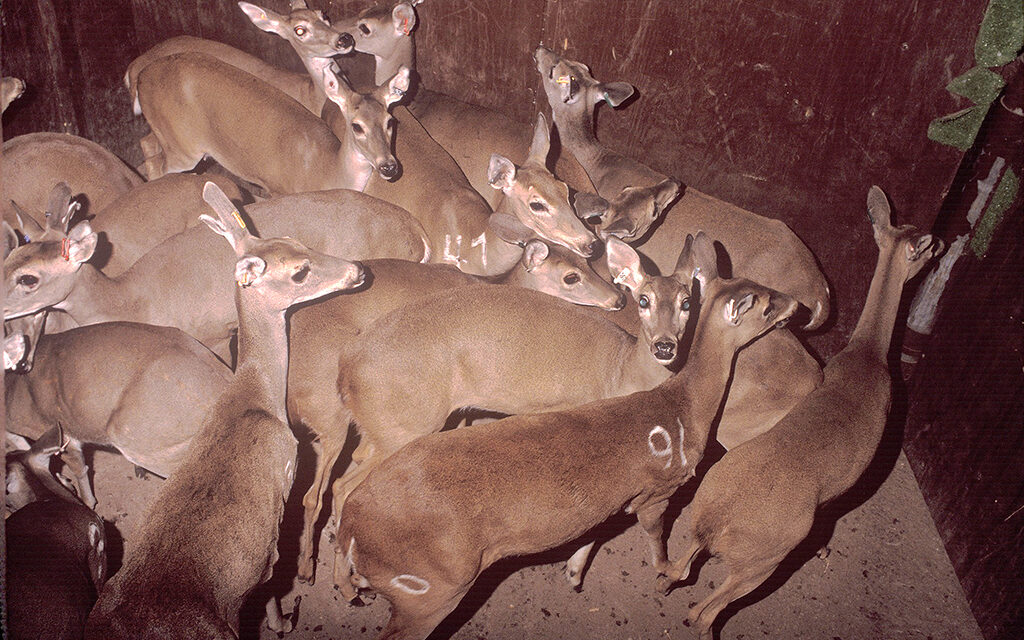
The retired biologist told me about a case the late South Texas Game Warden, Mike Bradshaw, worked several years ago. A deer breeder was suspected of replacing deer that died in his pens by transferring their ear tags to newly trapped, live, wild deer. Bradshaw, as the story goes, began calling the newly tagged deer “Ghost Deer” – the apparition of dead breeder deer. At least some think he originated it; I don’t doubt it — having accompanied Mike on several poacher stakeouts. Whomever originated it, it stuck.
I spoke with TPW Assistant Commander Kevin Winters about the recent August press release. He is TPWD’s chief of wildlife enforcement.
He said the last two suspects in a case that began in 2024 had surrendered to felony charges. Initially, a warden stopped a truck on a traffic violation with seven deer being smuggled from East Texas to private property. Both men were ultimately convicted of violations with intent to circumvent disease monitoring and testing requirements. Possession of deer and movement are regulated to mitigate CWD. (If you aren’t familiar with CWD, Google it. Suffice it to say, it’s fatal in deer!)
Transferring deer without identifiers (permits) hinders ability to trace its source if a disease crops up. That could threaten Texas deer populations and devastate rural communities which depend on hunting’s $9.6 billion annual contribution, according to TPWD’s Law Enforcement Director, Col. Ronald VanderRoest.
Additional investigations resulted in 22 other suspects being charged with 1,200 violations within the deer breeding industry and black-market wildlife trade. They were associated with three deer breeding facilities, ten release sites, one deer management pen, and three illegal facilities not registered in the Texas Wildlife Information Management Services (TWIMS} database. That means they were operating or receiving deer in violation of registration rules and disease monitoring protocols.
“Thes violations cannot be overstated,” said TPWD Executive Director, David Yoskowitz. “They undermine the very foundation of responsible wildlife management in Texas.”
JJ