
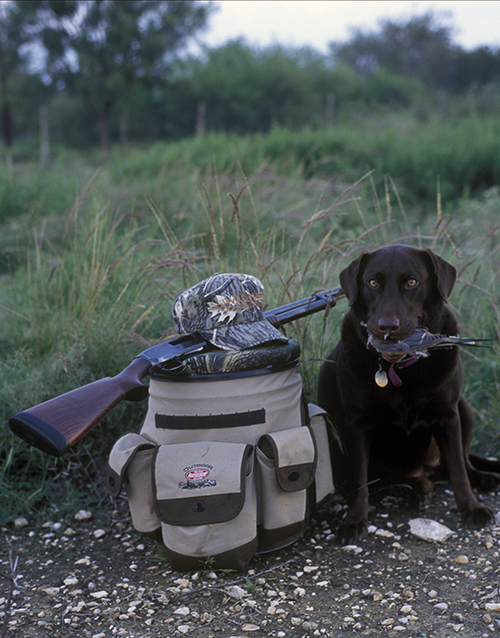
A good retriever, something to sit on, and your favorite shotgun help make dove hunting enjoyable. Shotgun magazines holding more than three shells MUST be permanently plugged to only a three-shell capacity. (Photo by John Jefferson)
by John Jefferson
Mourning Doves are hunted throughout North America. They’re the most numerous game bird and the most popular winged species among U.S. hunters.
Texas hosts about a third of America’s doves. Around 300,000 hunters in Texas bagged 32 % of the nation’s harvest, according to an excellent report just released by Owen Fitzsimmons, TPWD’s Dove Program Leader.
The most ever mourning doves in Texas totaled 37.5 million in 2016. This year’s survey estimates 35.9 million – a five percent increase from 2024 and 28 % above the long-term average.
Dove hunting adds around $316 million to Texas’ economy!
But the recreational value is inestimable. Opening day of dove hunting in Texas is the first hunting since last spring turkey season. Sort of a New Year’s Day for hunters in the North and Central Dove Zones; both open September 1. South Zone opens Sept. 14. Both mourning and white-winged doves are legal then in all zones, but only 15 doves TOTAL of all species are allowed in the daily bag limit – NOT 15 of each species. There are also South Zone Special White-winged Dove Days Sept. 5-7 and 12-13.
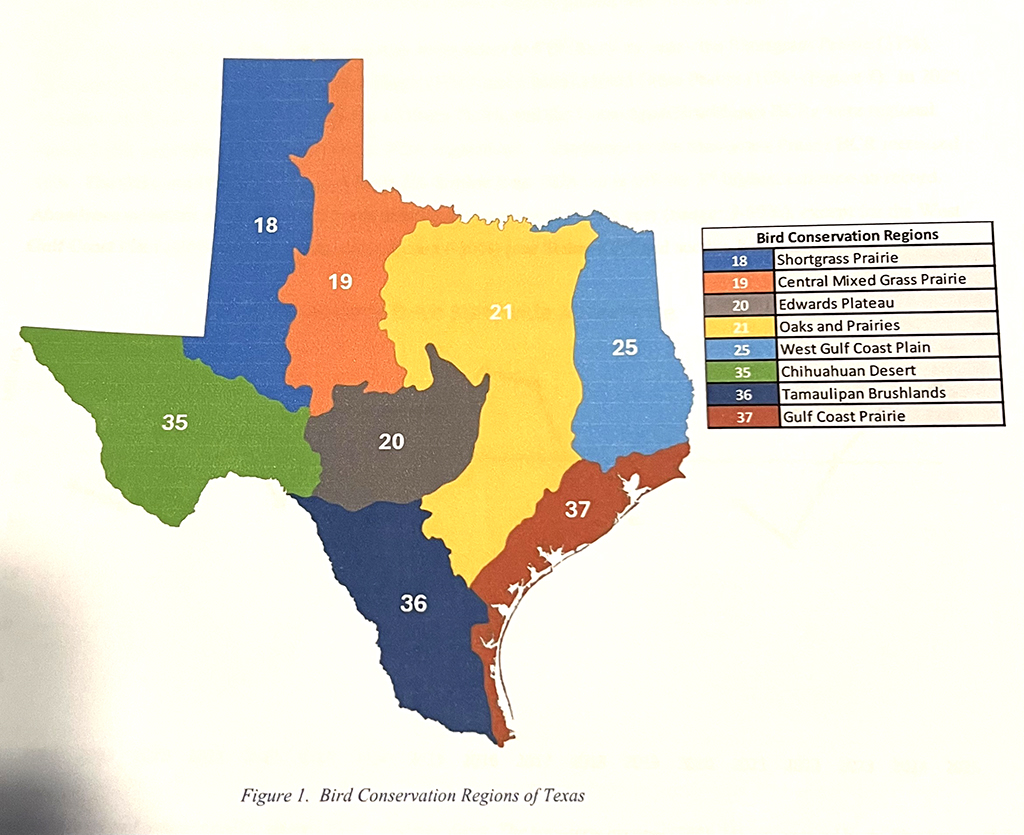
TPWD Map of Texas Bird Conservation Regions (BCRs). Eighty percent of Texas’ mourning doves occupy four BCRs: Shortgrass Prairies (31%), Oaks and Prairies (26%), Tamaulipan Brushlands (11%), Central Mixed Grass Prairie (10%).
(Map provided by Texas Parks and Wildlife Department)
Those are hallowed dates for hunters. I’ve enjoyed practically every opening day – even the one when I stepped into a hidden steel trap and the day Mike Cox and I sat in his Suburban and just watched it rain. Hunters always have interesting past hunt stories to share!
A new 2025-2026 Hunting license with a migratory game bird endorsement is required of each adult dove hunter, in addition to the HIP certification. (If the license sales agent doesn’t ask you about your last migratory hunting success, point out that requirement to him.) Hunter Education is also required of anyone born on or after Sept. 2, 1971.) The 2025-2026 Texas Outdoor Annual ONLINE has details.
Texans also account for about 87% of America’s white-winged dove harvest. Whitewings have expanded all across Texas and are scattered throughout the U.S. South. Surveys showed 11.7 million here for 2025 – a decrease of 8 % from 2024, BUT still 15% higher than the long-term average!
Whitewings prefer areas with big roost trees and plenty of backyard bird feeders. Areas like Uvalde, for example, have a tremendous roosting whitewing population in those stately, spreading liveoak trees in town, but evacuating to the abundant grain fields out of town to feed.
Whitewings operate like that in many places.
Mourning doves, however, prefer country living year around. I’m with them, although I was enthralled by whitewings when I moved to South Texas in 1966. One nested across the street from my office. I’d stand by my car before going into work just to hear it cooing.
Traditionally, the Short Grass Prairie, Oaks and Prairies, Central Mixed Grass Prairie, and Tamaulipan Brushlands host 80 % of the mourning doves. Central Grasses and Tamauiapan Brushland can expect large increases this season and Short Grass Prairie increased. Oaks and Prairies decreased slightly but is still high. The rest were above average, except West Gulf Plain and Chihuahuan Desert.
JJ